V3 Prototyping – Inflatables

A key challenge in devloping a compressed-gas flotation aid is designing and iterating the buoyant structure.

My first attempts at this involved using a hotend and melting vinyl sheet together. However, I found that this method was extremely unreliable for creating perfect seams. Without a way to allow the hotend to smoothly glide over the plastic whilst melting it, I was forced to move onto another solution.

HH-66 Vinyl cement is specially formulated for reapiring vinyl inflatables. Whilst creating an effective seal, HH-66 is extremely hazardous. The in-built brush was difficult to use with accuracy, leading to drips of glue cementing undesired areas of sheet together.

Image result for hh66 cement

After speaking to my tutor Simon, I thought about his suggestion of buying an iron and using greaseproof paper as a protective lining between the hotend and the plastic. I found a ‘mini iron’ with variable temperature online. It is intended to be used for embroidery, and ended up being perfect for my own applications.
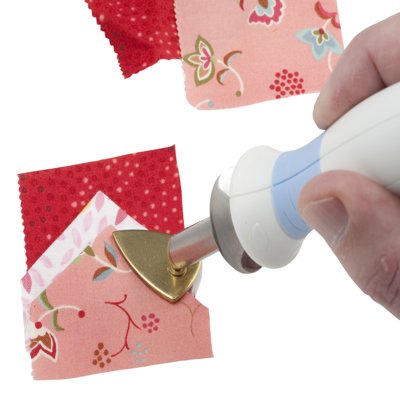
Antex R4L82TW00 Mini Iron Master BP 5/10W Craft Kit, Blue/white

This slideshow requires JavaScript.

It took some roughly three times as long to design, cut and assembe these complex templates in card than to cut, trim & weld these shapes together in vinyl. It was a challenge creating a 3D shape that aesthetcially matched my sketches and provided sufficient volume, with perfectly matching seam lengths.

Insight: I should use surface-CAD in future models for two reasons:

  • It enables quicker iteration cycles: by flattening 2D quilts taken from an already perfect 3D form in CAD. This is much quicker than having to messily edit panels as they are assembeld to realise a 3D form in card.
  • It ensures perfect seam lengths, meaning that there are zero issues welding the complex curves together.
  • It allows me to achieve any desired form with the minimal number of panels. This is key to assembly difficulty and reliability in-use.
  • Flattening quilts allows me to print off templates instead of physically drawing them onto card. This increases modelling accuracy and reduces time taken.

This slideshow requires JavaScript.

Following from Simon’s thought in greaseproof paper, I decided to use masking tape to line the welding surfaces. Whilst protecting the outer surfaces, this also made the edges on each panel perfectly flat. This made working and welding with the sheet much easier than If i had not lined these edges.

I expected to be able to remove the masking tape once welds had been made but it seems that the molten vinyl bonds to the tape, making it irremovable.

A key area of wasted time on this prototype was cutting and sticking so many pieces of tape to match the complex curves. I orginally decided to tape the outer edges of each panel, hoping that I could use this area to weld and form a seam at the marked line.

I found that whilst the assembly became more complex as more panels came in, it became increasingly difficult to hold secure these complex curves as I brought the hotend to them.

As the assembly reached a stage of near-completion, the inadequacies of my modelling technique in began to reveal themselves as small differences in seam length between panels. This could be partly down to the tape lining being less flexible than the vinyl sheet. Nevertheless, I hope to improve accuracy with future models.

Insight: I should find a more flexible tape!

  • This would enable me to match the complex curves in the panels in single strips of pliable protection. Less time spent in this process, more favourable results.
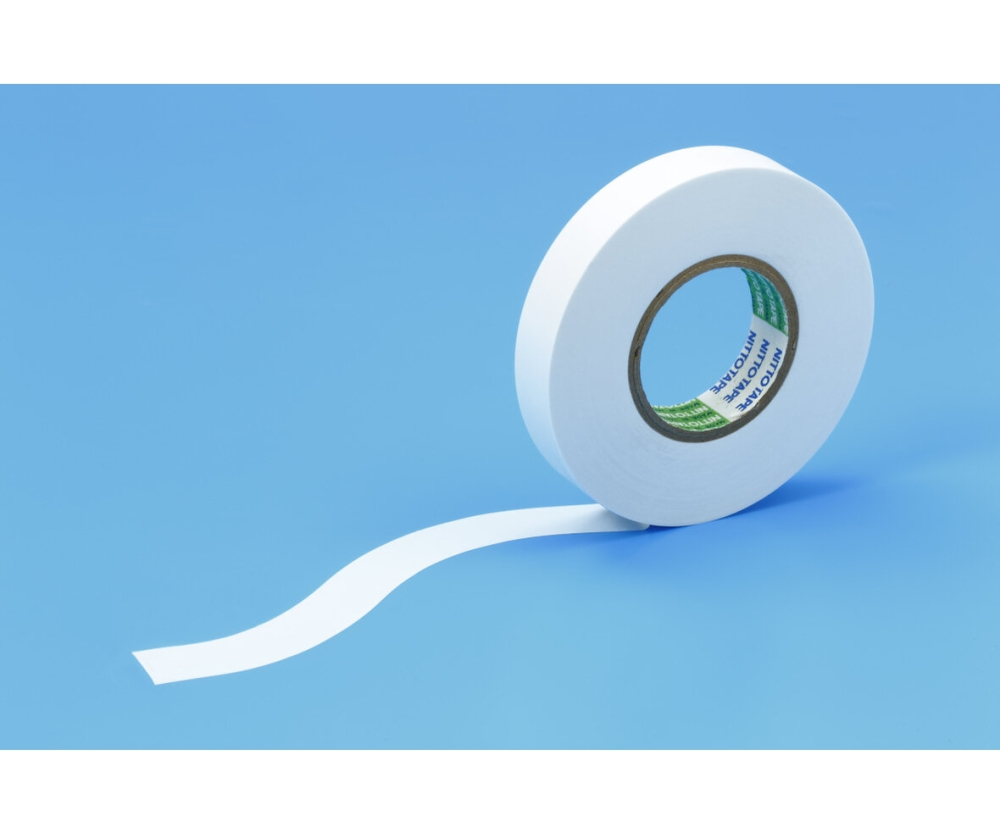
Image result for curves tape tamiya

Insight: I should devlop this structure in a way that involves a minimal number of seams.

  • This will recuse assembly time and complexity. It will also improve overall reliability: fewer points of failure in the buoyant structure.

This slideshow requires JavaScript.

I had to abandon this prototype prior to completion. Its seams were beginning to misalign, making future panels difficult to install. I have,however, learned a ton from making this first prototype. Furure iterations should be much faster, with the use of CAD, printing and stretchy tape.

Skills gained:

  • heat-welding vinyl
  • assembling complex structures


V2 Model Feedback

On Wednesday I went to see Kevin Anderson with a V2 prototype.

The key features of the prototype were taken from sketch development after V1. These features included modularity, versatility and a basic layout and operating procedure.

Whilst Kevin agreed that modularity and versatility were great benefits for such a device, he argued that this development direction could be more suited to watersports enthusiasts (i.e. privately/self-directed activities) and not coasteering groups. Kevin clarified that simplicity and guaranteed function were of paramount importance, and so this is why he stocks an entire range of basic ISO 50 lifejackets:IMG_9785IMG_9787

When coasteering Kevin argued that by giving the users this PFD, it enabled them to spend less energy in the water. This in turn enables a group to continue their activities for longer than could be achieved without flotation aids. I found this insight very interesting, I had not considered that providing fixed flotation reduces fatigue in watersports. This inherently makes a watersport safer, as mistakes are more often made when exhausted.

I look forward to going Coasteering and Kitesurfing with Kevin next month.

It has become clear that a shift in focus is needed in future development stages.

My development process so far has led me to focus on modularity and range of applications across several watersports. Kevin loved these concepts but made very clear that this concept was more tailored for watersports enthusiasts, not coasteering groups.

Kevin also noted that the volumes of the components were far too exposed and required more protection. Being worn on the back, a user may be unaware of the sensitivity of some of the components. Kevin argued that the all components should be enclosed and protected throughout use.

He and I now envisage a modular lifesupport: by interchanging modules, different classifications can be granted and so application across varous watersports can be achieved. Kevin sees potential for this concept across the industry, from yacht racing to surfing. I must then account for such sports throughout development.

I will continue my development understanding that this is more of a niche product, targeting individual needs within dynamic watersports. What excites me is the potential of one ‘core’ concept to meet so many specific safety requirements across dynamic watersports.


Project Validation

I have contacted two companies in the industry, in an effort to learn as much as possible about the design of portable flotation devices and SCUBA equipment.

The first company is Apeks Aqualung, the UKs leading designer and manufacturer of Marine and SCUBA equipment.

Capture2

If I am able to arrange a factory visit, I hope to build on this by speaking to the in-house engineers. Hopefully their interest in my project and my interest in their process will enable them to validate the engineering of all air regulation equipment in a design proposal.

The second company is Crewsaver / Survitec, makers of the Ergofit50N. This company is the UK’s leading manufacturer of lifesaving inflatables and buoyancy aids. Despite being based on the South Coast in Gosport, I hope to visit them at a later stage in my project for validation on a fully developed prototype.

Capture

fd31e700acdb6fb765a413d96c59cc80

Compressed Air Storage

Size and system details of compressed air that I wish to select during development is a difficult decision to make. Cylinder size and volume are linked, and so any efforts to keep the device compact must recognise this.

I have chose to continue developing a solution that can take two sizes of cylinder. This is for the following reasons:

  1. The solution is to be aimed at children and adults of all ages and abilities. One size of cyinder does not account for all of these user’s needs.
  2. The ability to swap out one size of cyclinder for another larger or smaller one may make the solutuion more adaptable to a wider range of watersports applicatiuons.

Given that the rates of air consumption are as follows:

A  half litre tank pressurised to 200bar means you have around 75litres of air to breathe before you hit 50bar. Air consumption is difficult to measure but the average tidal volume (the bit we breathe in an out during a normal breath cycle) of the human lung is 0.5l, and the average breathing rate of an adult is 12-20 cycles per minute, and so in theory, it would be possible to breathe from these devices for 12.5 minutes.
But those figures only apply to healthy adults at rest. The added exertion of swimming alone could easily reduce that figure by half. Taking breaths of 1.5 litres, 20 times per minute, would mean red-lining in 2.5 minutes – at the surface. At 10m, this translates to 1 minute and 15 seconds of air before reaching 50 bar – or 1minute 40 seconds before emptying the tank dry. At the ‘maximum’ depths of 50m or 20m, the air supply is reduced to mere seconds.

I will pursue development along two tank sizes:

Small: 0.25 litres – at 3000psi this will account for approximately 3 minutes for an adult at rest.

Large: 0.4 litres – at 3000psi this will account for approximately 6 minutes for an adult at rest.


Paintball:Related image

Advantages over SCUBA:

  • in-line threaded connection ensures compact, conventient mounting to any frame
  • come in a variety of small sizes, can be either fibreglass reinforced steel or pure steel.
  • include a pressure guage and seperate air filling valve adjascent to mounting thread.


Teardown: 2nd Stage Regulator

Whilst gfirst stage regulators are very heavy duty pieces of equipment, the second stage is remarkably simple and elegant. According to Amir (my local dive shop owner) this design has been largely unchanged since its inception over 50 years ago!

This slideshow requires JavaScript.

The second stage regulator has clealy been well designed for maintenance and reliability in equal measures.

This slideshow requires JavaScript.

In essence, the second stage is a plastic container with one entry, one exit and a complete opening (that is, the mouthpiece). It works by the user drawing in air from the container. This change in pressure draws in the main spring, as a result of the large rubber feature contracting. This opens the main line of air delivery. When the user starts to exhale, this change in pressure forces the rubber feature outwards, simultaneously closing off the air supply. Furthe exhalation builds up pressure in the container, which is released from a one-way silicon valve in the base of the container. This positioning of the valve is protected by large structures in the moulding to prevent any damage. The plastic housing funnels bubbles produced are funneled outwards to the left and right, so as not to interfere with the diver’s view.

Teardown: LifeBelt

csc_0550.jpg

The lifebelt is an inaccessible inflatable structure worn at the waist. It is powered by a replaceable CO2 canister, which the user can purchase at any bicycle shop. It is perhaps the closest competitive product in the target industry area, and so lots could be learned from its design.

IMG_9311

This design, at first glance, is clearly one for continued use and reliability. The entire structure unfolds along velcro seams, enabling a user to fully access, repair and maintain the product. It also provides full access to the CO2 regulation module:

This slideshow requires JavaScript.

The location and position of the CO2 module ensure that the caniser itse;f is kept well inside its inflatable structure, whilst the pullchord used to activate it exits the structure at 90degrees. This is an imemdiate design flaw – why should the pullchord – the user’s literal lifeline – be positioned so that its use puts unnessesary force on the string? The handle is a very poorly moulded, with an entierly flat and sharp feel, there is a lot to be said here on ergonomics. It is clear that this product, whilst designed for repeated use, has been designed with manufacturing cost as a significant overbearing restriction.

This slideshow requires JavaScript.

Fully removing the CO2 module highlights its securing method to the fabric inflatable with an adhesive flange. The gas seems to espace through the other side of the allen-head. Further opening this module without damaging components proved too difficut at this stage, and it may prove useful in its complete form for testing my own models!

Features to be taken as inspiration:

  • Velcro seals ensure reusability
  • CO2 canister positioned internally, surrounded by inflatable.
  • reliable, simple regulation in compact form factor

Areas to avoid in development:

  • Poor handle design and consideration.
  • Uncomfortable positioning on body – also prone to sliding off completely.
  • Overall poor material choices, given impression of low-quality product.

Teardown: Hovding Helmet

Image result for hovding helmet

The Hovding inflatable crash helmet is an alternative for those who desire a less obstructive, more comfortable option for safer cycling.

It works using a battery, powering a single PCB with accelerometer and on-off switch circuits. When in use, if the accelerometer is activated by high-speed (and so high collision risk) the circuit will fire off the CO2 canister release. This in turn inflates a complex multi-layered nylon structure, which protrudes from the neck band to surround the user’s head.

To see the industrial design and engineering decisions made by the team in developing this innovative product, I chose to buy a used one and tear it down. Despite retailing at over £200, this product loses all value after a single deployment. Whilst most normal bicycle helmets should not be used after an accident, £200 is still enough to force a user to reconsider purchasing another.

This slideshow requires JavaScript.

This slideshow requires JavaScript.

One of the first things I notice before cutting intto the product is the location of the on/off switch and charging ports. Naturally, the accelerometer inside draws power continuously through use, so ensuring that the user only has the product turned on when needed is vital. This is especially true in the case of a life-safety device such as the Hovding. To ensure a fluid user experience, the designers and engineers have opted to rig a senser to the ziptie button. My first impressions of this were good, but after a couple of uses of this button with the zipper it did not feel reliable enough, and could too easily come loose. This gave an unrefined feel to the product – how and why does something so simple in essence need so much complication? A much simpler push button with an LED would have sufficed (with the LED providing more user feedback than the original); I am struggling to see the need to develop and test a custom component for this tiny but vital area of the user experience.

This slideshow requires JavaScript.

A closer look at the outer neckband shows series of popped stitches. This, whilst being a deliberate feature, ensures that this is a single-use product. Such features in the design make sense – in the case of road safety airbangs, the inflatable itself is well hidden from access and maintenance, ensuring tamper-proof qualities and ensuring function when it truly matters. However, cars and bicycles are two very different modes of transport, and whilst hovding have considered many things well on this product, they have clearly not focused on circular design principles in their process. Not a single component of the hovding can be repaired by the user.

This slideshow requires JavaScript.


After cutting away the main inflatable structure from its neckband, I was able to access the CO2 canister and PCB. To my surpise, they have chosen to use a jubilee clip with rubber lining around the canister itself as a means of ensuring a seal. The immediate gas exit point of the structure are lined with a material not found elsewhere on the product. It is here that residue can be seen. My assumption is that this extra lining ensures minimal damage to the core structural panels of the inflatable, whilst absorbing some of the inevitable temperature fluctuations that come with releasing any gas at high pressure. The main structure istelf is two-layered, with a tough nylon textile outer and a solid clear sheet of plastic on the inside. IMG_9309

Features to be taken as inspiration:

  • Different fabric linings near gas entry point to account for temperature changes
  • Multi-layered fabrics of various specifications

Areas to avoid in development:

  • single-use design. This prohibits a huge user base from taking on the product concept.
  • Electronics. These require power, in an industry area which does not require such technology to function (look at Lifebelt)

Overall Direction

This basic prototype serves as a visual demonstration of where some of the fundamental choices along this explorative process have been made.

Combining the convenience of CO2 inflatability with simplified SCUBA
modernises safety in watersports.
Positioning of the larger volumes on the spine with a mouthpiece on the arm ensures minimal interference through several watersports.

Softgoods Design

Softgoods design will involve a signifcant portion of later development
stages, given that this product concept is to be worn through
a variety of watersports.

Critically assessing a variety of sports harnesses for prototyping
efficiency proved to be useful for when designing my own.

The first harness tested was a ‘clavical support’.
Whilst offering a reliable frame to build from, it was poorly constructed.clavical1.png

clavical2

This second clavical support included straps that cross the chest.
It was much better designed, in terms of both material and form factor.
Wide, elastic webbing straps dissipated pressure more evenly.

I will use this harness as inspiration when developing my own solution.

shoulder1

To offer a wider variety of potential mouthpiece locations during testing, a shoulder harness was also included in sessions with Tom and Kevin.

Operating a mouthpiece underwater

mouthpiece development.png

Given that this product will not function at depth, any second stage of air
regulation is not necessary with this concept.
This permits the mouthpiece to involve nothing more than standard valves, as air regulation can take place elsewhere.

Early prototypes worked with disposable one-way valves found in
respiratory test equipment, and silicon bite valves from hydration packs.

mouthpiece hero.png

Silicon bite valves’ outstanding ability to retain air when submerged and
reliably deliver it with an intuitive bite has inspired me to continue using them in future development stages.